Sunday, April 10, 2016

Journal #14 Witty Whitman
Whitman's Notebook
- Upon looking at Whitman's notebook I noticed that his handwriting is crazy illegible! When I first look at it I think I can read it, but when I actually try I just can't! I can't tell if the writing is being scratched through or not and I can only make out half of each word. He is also really good at drawing. Most of the time when I think of a writer's journal I think of just pages and pages of unedited writing. I just think that every word that they spit out is just perfect. But, in his work I see that a lot of it has been revised and reworked. I notice the free-spiritedness by how he takes moments to just doodle in his pages. It really makes me connect with him because I've written random excerpts in notebooks and then just start spurting out drawings.
- Touching back on the free-spirited aspect of of Whitman, I was really surprised about the part mentioning Abraham Lincoln. It doesn't really surprise me that Whitman was infatuated with Lincoln because Lincoln did believe in issues of equality such as abolishing slavery. Another aspect that emphasized his free-spiritedness was the random scribbles of words found throughout his journal. The fact that he does this really does make me think that he was very spontaneous and kind of reminds me of a mad scientist. Whitman also speaks a lot about freedom, natural elements such as water, wind, clouds, death to reflect his emotions. In addition Whitman also spoke a lot about time and the idea of death. In this I can see that he really challenges society buy talking about things that in a manner that appears ready to face anything. I later learned that Whitman wasn't actually responsible for those drawings, but rather someone else was. This was another thing that surprised me because if I had a journal, I wouldn't want anyone to see it much less write it in. I think this is another example of Whitman's openness with the world.
 |
| Taken from the article "Birthday from the Vault," by Kevin Murphy http://www.mhpbooks.com/from-the-archives-walt-whitman/ |
Sunday, March 20, 2016
Journal #13 My Definition of the American Dream
The American Dream
The American Dream
 |
| Disney |
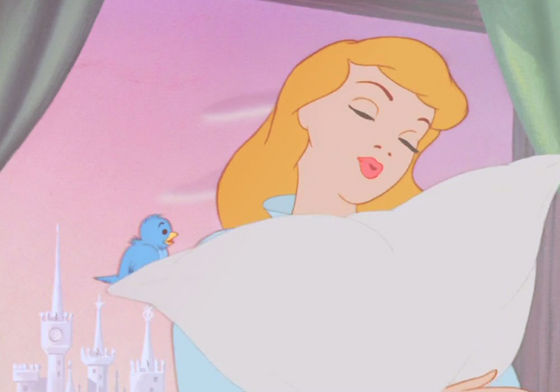
To me, the American Dream is the pursual of ultimate happiness through hope and hard work. I sort of lead to this assumption by first dissecting the words "American Dream." The term American has always been interesting to me. How can we really define the term American? Sure, nowadays we define an American as any citizen of the United States, but in regards to ethnicity we do not really have one. With the exception of Native Americans, everyone has immigrate to this country at some point and the origin of the American Dream was first seen during the great influx of immigrants in the early 20th century; meaning the origin of the American Dream came from immigrants. I think that's such a powerful thing, because anyone can pursue the American Dream in America and had work has always been associated with this phrase. When looking at the word "Dream" I instantly think of Cinderella when she was singing "A Dream is a Wish." I immediately think of something that I really desire and hope to one day achieve. For a while we all start "dreaming" about what we want, but it takes actual action in order to achieve it, hence the association with hard work.
 |
| Taken from the eMaze Presentation: https://www.emaze.com/@AOZQTCCQ/The-American-Dream |
My attitude towards wealth and poverty is that both situations are extremely difficult to dealt with. With poverty you are constantly wondering what your next meal is going to be and whoever you are also providing for will get fed. With wealth you kind of heave to worry about still being humble because it is very easy to be corrupted both by material possessions and the people that you associate yourself with.
Sunday, March 6, 2016
Journal #12 Kafka, Camus, and Importance of Translations
The Translations
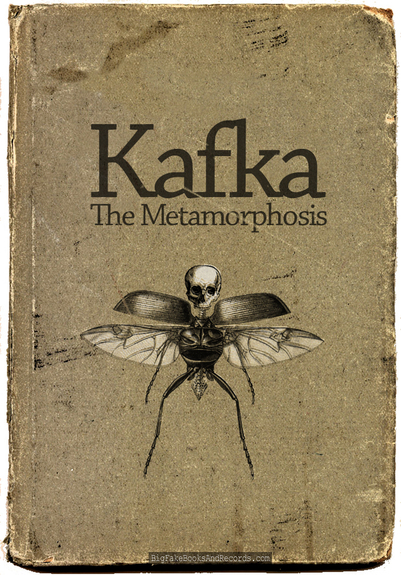
Based off of the previous translations, the use of diction negatively connoted the main character while also stressing the context of the situation. For example, in Translations 1, 2, and 3 used large words to stress the abnormality of the situation. But, in Translation 4 the translator's use of monstrous not only brought on the sense of Samsa's size, but the ugliness of his new form. So by adding adjectives to the sentences it changes the portrayal of the character. The size of the sentence also effected the seriousness of the situation. For example, Translation 2 was the shortest out of all of the other translations and appeared to gloss over the occurrence of Samsa's transformation. I think the fact that Kafka never explicitly explained why Samsa got changed into a bug is super important and the fact that the opening sentence of Translation 2 glosses over the situation would distract the reader because they would be focusing too much on how it happened rather than the actual plot of the novel. Translation 4 appeared to make the same mistake by saying "found himself" as if it were a casual situation.This is similar to the novel Never Let Me Go where the author never mentions what the exact purpose of the donations were and who they went to.
Therefore, I think Translation 3 is the best because it hinted towards the abnormality of the situation and alluded to some sort of justification as to why it happened. Translation 1 would have been good as well if it were not for the awkward syntax towards the end; it appeared to be too literally translated. This brings to concern how translators translate novels.
I usually am all for straight forward translations of the novel because they tell you exactly what the author said and leaves the meaning open to the readers' interpretations of it. However, I realized that this can sometimes hinder the meaning of what the sentence was trying to say and can create awkward syntax which can confuse the reader. Conversely, if the translator decides to flower the sentence up more than what the author has done, it can give importance to something else that the author was never trying to give the importance to. I now understand the complicated predicament of translations. I also understand that it is hard to contact the author and see what their actual intent is because that still can be skewed if communication is not fully comprehended. Sometimes the translations do not exactly translate literally either. However, I do think that if the correct tone is maintained throughout the novel, the meaning can still be held accurately. Since I have not read The Metamorphosis, Translation 3 appears to be the best because of the implied context it has given. I think that by doing so it helps focus on the author's intent which is the prime focus of every translator's purpose.
- In the first translation, there are no commas, colons, and semicolons used. Because of this, the translator had to narrate the sentence more. If the translator had used a semicolon, they would have justified the Gregor Samsa's awakening. He also used more verbiage in his sentence. For example, "he found himself transformed in his bed into a gigantic insect." This appears to be long-winded and not something somebody would actually say if they were verbally telling somebody what happened. This was necessary because of the lack of commas, colons, and semicolons. This sentence also appears to be longer than most of the other translations because of this. The translation also appears to be translated more literally because it said "in his bed into a gigantic insect." These two different events could have been broken up and the repetition of "in" made it appear long winded and unnatural. This kind of mimics what Google Translate does. However, one could argue that the this unnatural feeling emphasizes the discomfort Samsa would have been feeling once he found out he had been transformed into a bug.
- This sentence is very simple and short in comparison to the other translations. However, the short and simpleness of the sentence kind of brushes over the fact hat Samsa got turned into a "bug." This is seen through the phrase "to find himself." This kind of adds to the groggy mood Samsa must have been feeling because he "woke from uneasy dreams." The phrase "one morning" also adds to the simplistic vibe felt by the sentence. The translator also choose to use the word bug instead of insect making the reader think of small house-bug. Usually when I hear the word insect I think of more complex species of bugs like the ones that I cannot pronounce.
- In this translation appears to be setting the sentence in a particular time period and stresses the fact that it is appearing in the morning by starting the sentence off with "when." This sentence appears to be the second longest translation out of all of the other ones. The fact that this translator used the word "transform" it makes me believe that they are trying to imply that mystical forces are afoot. Since Franz Kafka never actually explains to his readers how Samsa turned into a bug, this kind of justifies what happened. This sentence appears to emphasize on the extraordinary aspects of the event by specifying Samsa's size. The translator distinguishes the fact that Samsa did not get turned into a regular bug but an "enormous bug." This makes me think that Samsa is still the same size he was when he was a human except now he is a bug.
- This translation appears to be more formal by starting off with the phrase "one morning." There also appears to be more commas in this sentence than any of the other translations and appears to be the longest out them all. This sentence appears to stress every bit of information presented within the sentence and maintains the readers'. However, I found this sentence to be the most uninteresting because there was too much punctuation! Because of the long-windedness and formality of the sentence, it kind of reminds me of a twisted fairy tale. I use the word twisted because it describes the main character, Samsa, as a "monstrous vermin." This gives him a negative portrayal and appear like a freak of nature. Judging off of this sentence, I assume that this translator's novel would be way more narrative compared to the other authors. This is kind of interesting to me because the use of punctuation can help break the sentences down and make them shorter. But, in this case, the author is using it to add more narration and make the sentences longer.
 |
| Image taken from the article "12 Unsettling Facts About The Metamorphosis" by Jeff Wells |
Based off of the previous translations, the use of diction negatively connoted the main character while also stressing the context of the situation. For example, in Translations 1, 2, and 3 used large words to stress the abnormality of the situation. But, in Translation 4 the translator's use of monstrous not only brought on the sense of Samsa's size, but the ugliness of his new form. So by adding adjectives to the sentences it changes the portrayal of the character. The size of the sentence also effected the seriousness of the situation. For example, Translation 2 was the shortest out of all of the other translations and appeared to gloss over the occurrence of Samsa's transformation. I think the fact that Kafka never explicitly explained why Samsa got changed into a bug is super important and the fact that the opening sentence of Translation 2 glosses over the situation would distract the reader because they would be focusing too much on how it happened rather than the actual plot of the novel. Translation 4 appeared to make the same mistake by saying "found himself" as if it were a casual situation.This is similar to the novel Never Let Me Go where the author never mentions what the exact purpose of the donations were and who they went to.
Therefore, I think Translation 3 is the best because it hinted towards the abnormality of the situation and alluded to some sort of justification as to why it happened. Translation 1 would have been good as well if it were not for the awkward syntax towards the end; it appeared to be too literally translated. This brings to concern how translators translate novels.
I usually am all for straight forward translations of the novel because they tell you exactly what the author said and leaves the meaning open to the readers' interpretations of it. However, I realized that this can sometimes hinder the meaning of what the sentence was trying to say and can create awkward syntax which can confuse the reader. Conversely, if the translator decides to flower the sentence up more than what the author has done, it can give importance to something else that the author was never trying to give the importance to. I now understand the complicated predicament of translations. I also understand that it is hard to contact the author and see what their actual intent is because that still can be skewed if communication is not fully comprehended. Sometimes the translations do not exactly translate literally either. However, I do think that if the correct tone is maintained throughout the novel, the meaning can still be held accurately. Since I have not read The Metamorphosis, Translation 3 appears to be the best because of the implied context it has given. I think that by doing so it helps focus on the author's intent which is the prime focus of every translator's purpose.
Sunday, February 21, 2016
Journal #11 I'm Down with the IOC (Practice that is...)
Thought Process
- My Preparations:
<-
- Writer: William Shakespeare written in 1606, 17th century.
- Genre: Dramatic tragedy
-Purpose: Written in honor of King James I.
-Thesis: Through the use of pathos, logos, ethos, and strongly connoted diction Shakespeare was able to reflect the societal beliefs of the time period while also demonstrating how the desire for power can successfully corrupt a human being.
- Spoke of fertility
- More dialogue from L.M. than from the Messenger
- Compares womanhood to manhood to show that manhood is superior.
- Shows desire for husband to be on the throne, so that she can be royal, which in turn demonstrates her desire for the throne.
- Alludes/foreshadows to uncertainty
- Speaks of hell to symbolize darkness and conversion
- End Result: In turn this shows the ability desire has over the human mind. That even the most valiant and noble can still have the will to commit acts of crime to get what they want. This is stressed through the usage of pathos, logos, and strongly connoted diction. - My Recording

3. My Grading:
- Criterion A: Knowledge and understanding of the text or extract: 9
I think I got a 9 on this because I was able to mention the author, the time period, the actual reason why this text was written, and I was able to tie this back in to the actual analysis of the text. However, I probably could have spoken a little bit more had I had known a little bit more about the time period and the religious beliefs of that period. - Criterion B: Understanding of the use and effects of literary features: 6
I think I got a 6 because I probably spent too much time talking about the context of the extract when I could have spent more time analyzing. I feel like my analysis was alright, but I kind of felt lost at some points when I was trying to make a smooth transition from one point to the next. I feel like this could have hindered me a bit. I feel like I kind of copped out at the end. - Criterion C: Organization: 4
I feel like this was barely a 4 because I did a lot of takes, but even then I still did not quite have a firm idea of how exactly I wanted to talk about this. - Criterion D: Language: 4
I think I got a 4 for this because although my vocabulary and grammar were not the best, I was still able to use literary words such as "demonstrate," and other trigger words as well. I also tried my best to make it all flow it might be bordering a 3 though.
Friday, February 5, 2016
Journal #10 I've Got You Covered...
Book Cover Analysis
General Analysis of the Covers
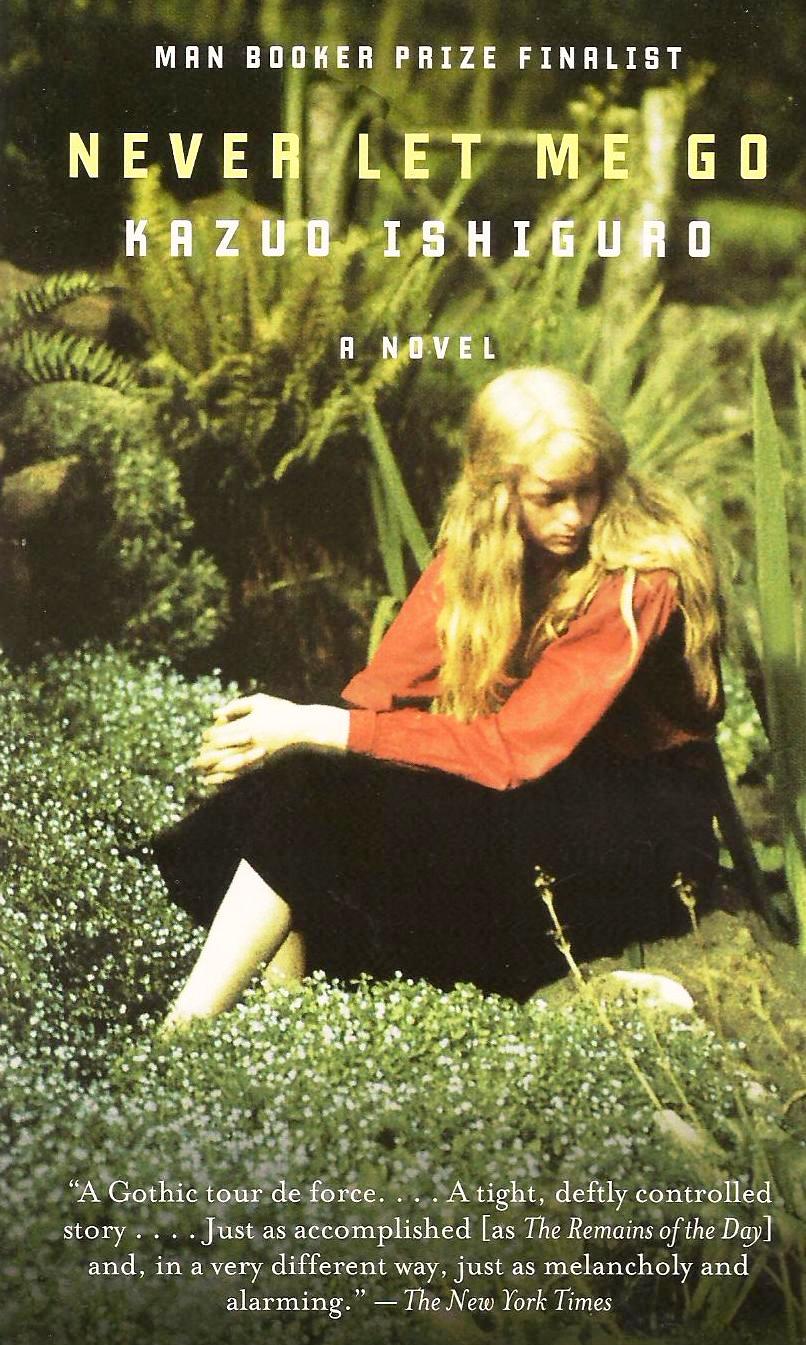
This book cover has a girl on the cover with long blonde-draped hair over her shoulders looking down upon the flowers. She appears to be very sad. She is sitting down in a field alone. The title of the novel is placed above her head drawing emphasis on the girl rather than the title. Because she is seen looking away from the title it is implied that something has been let go since she is denying the name of the novel. Her overall appearance is very different from the second image since she has different colored hair. Her attire also appears to be more classier and gloomier than the other girl. The image is also sharper, but still has a haze around her head. Considering the actual plot of the book, the actual portrayal of the plot is correct in the fact that it is actually a sad novel. However, there is no clear description of what the main character, Kathy, looks like. The field is not entirely mentioned either. The only time it is really mentioned is when people are playing football on the field and when Kathy passes by some fields as she is driving.

This cover is a lot more simplistic. It shows a little girl who appears to be playing. The yellowish-orange background coupled with the blurred image of the girl playing stresses the past and plays on the title "Never Let Me Go." The title is seen right in the center of the novel drawing more emphasis on what the actual book is. However, the size of the font is almost identical to the author's text size. This provides the author with equal credit.The background color appears to be a gradient; going from dark to light. This also plays on the fact that something is being let go. It implies to the audience that it has something to do with the past. Because a little girl is seen on the cover of the novel, it can be implied that it must have something to do with youth and vitality.
 For this cover of the novel, the emphasis appears to be draw on the author Kazuo Ishiguro since his name is larger than the actual title. Usually we think of book covers following these conventions: Title, Author, background, and occasionally a little excerpt about how great the author/ novel is below. Instead, this cover appears to have the credibility of the book on both the top and bottom of the cover, which once again emphasizes the credibility of the Ishiguro. In addition, the overall background of this novel appears to be more grim. However, the lighter area of the book surrounds Ishiguro's name rather than the title of the novel. The background appears to be playing off of a scene that was towards the end of the book where it is Kathy, Tommy, and Ruth's last road trip together to this beached boat. This scene was kind of their acceptance of their trio finally ending, which stresses on the title "Never Let Me Go." Although this is something someone would only be able to recognize if the have read the novel, the grimness of the background alludes that this book does not have the most pleasant ending.
This cover is a lot more simplistic. It shows a little girl who appears to be playing. The yellowish-orange background coupled with the blurred image of the girl playing stresses the past and plays on the title "Never Let Me Go." The title is seen right in the center of the novel drawing more emphasis on what the actual book is. However, the size of the font is almost identical to the author's text size. This provides the author with equal credit.The background color appears to be a gradient; going from dark to light. This also plays on the fact that something is being let go. It implies to the audience that it has something to do with the past. Because a little girl is seen on the cover of the novel, it can be implied that it must have something to do with youth and vitality.
For this cover of the novel, the emphasis appears to be draw on the author Kazuo Ishiguro since his name is larger than the actual title. Usually we think of book covers following these conventions: Title, Author, background, and occasionally a little excerpt about how great the author/ novel is below. Instead, this cover appears to have the credibility of the book on both the top and bottom of the cover, which once again emphasizes the credibility of the Ishiguro. In addition, the overall background of this novel appears to be more grim. However, the lighter area of the book surrounds Ishiguro's name rather than the title of the novel. The background appears to be playing off of a scene that was towards the end of the book where it is Kathy, Tommy, and Ruth's last road trip together to this beached boat. This scene was kind of their acceptance of their trio finally ending, which stresses on the title "Never Let Me Go." Although this is something someone would only be able to recognize if the have read the novel, the grimness of the background alludes that this book does not have the most pleasant ending.
 This cover also plays on the grimness of the story. It also focuses on the donor process of the novel since there appears to be a torso appearing on the front with outlines of some vital organs being displayed within it. This once again plays on the idea of the vitality. This depiction of the torso was drawn rather than having an actual image of a torso. This appears to also allude to the idea of youth. The outline around the corpse appears to look like barbwire. This reflects the desire of wanting to be free, especially since the outdoors appear to be seen behind the torso. For those who have read the book they would also understand the internal conflict that all the clones have to come to grips with; understanding that their fate has been determined. The font size of the title is very interesting as well. Firstly, the title appears to be much larger than the author's name which is located below the title. Secondly, the word "Never" appears to be slightly smaller and more put off than the words "Let Me Go." This alludes to the fact that something is being let go. However, it is not necessarily indicating what is being let go. There also appears to be a faded background of some trees behind the torso.
Cover #2 vs. Cover #4
Both covers appear to be emphasizing on the idea of vitality and youth, but through different interpretations. In Cover 2, a blurred image of a little girl is seen while on Cover 4 a child's drawing of the human torso is being seen. Both appear to show this transcendence to adulthood through the the backgrounds as well by associating dark colors with light colors. However, the positions of their texts draw emphasis on different parts of the novel. For instance, the author's name is seen first on Cover 2 while the title is seen first on Cover 4.
The first thing that came to mind when I first saw Cover 2 was childhood. I thought about a kid playing in a windy field. If I hadn't read this book I would have thought that this novel was written by a middle aged woman reflecting on her adolescence. Because of the author's last name I assume that he is Japanese, because my best friend is Japanese. The little girl seen on the cover kind of looks like she is wearing an Asian dress. This leads me to believe that this cover was most likely developed by Ishiguro's team, because the text is written in English, rather than Japanese. For Cover 4, the first thing that came to mind was cancer since I saw the lungs, liver and small intestine. I would have thought this book was about a man dealing with some form of cancer trying to say goodbye to his family and friends. I think that this cover was most likely made by a British company,because of the dark and gloominess of the outdoors. The setting of the novel was said to take place in the U.K. which is known for their rainy weather, and the fact that Ishiguro was raised in the U.K., so I thought that this was just. I also recognize the name Andrew Garfield who is an English-American actor, so I definitely knew that this was a western-made cover created post the film production of the novel Never Let Me Go.
Cover #2 vs. Cover #4
Both covers appear to be emphasizing on the idea of vitality and youth, but through different interpretations. In Cover 2, a blurred image of a little girl is seen while on Cover 4 a child's drawing of the human torso is being seen. Both appear to show this transcendence to adulthood through the the backgrounds as well by associating dark colors with light colors. However, the positions of their texts draw emphasis on different parts of the novel. For instance, the author's name is seen first on Cover 2 while the title is seen first on Cover 4.
The first thing that came to mind when I first saw Cover 2 was childhood. I thought about a kid playing in a windy field. If I hadn't read this book I would have thought that this novel was written by a middle aged woman reflecting on her adolescence. Because of the author's last name I assume that he is Japanese, because my best friend is Japanese. The little girl seen on the cover kind of looks like she is wearing an Asian dress. This leads me to believe that this cover was most likely developed by Ishiguro's team, because the text is written in English, rather than Japanese. For Cover 4, the first thing that came to mind was cancer since I saw the lungs, liver and small intestine. I would have thought this book was about a man dealing with some form of cancer trying to say goodbye to his family and friends. I think that this cover was most likely made by a British company,because of the dark and gloominess of the outdoors. The setting of the novel was said to take place in the U.K. which is known for their rainy weather, and the fact that Ishiguro was raised in the U.K., so I thought that this was just. I also recognize the name Andrew Garfield who is an English-American actor, so I definitely knew that this was a western-made cover created post the film production of the novel Never Let Me Go.
Sunday, January 24, 2016
Journal #9 Once Upon a Time
A mockingbird remix of TED 2006
 |
| http://www.picpicx.com/mockingbirds/ |
Summary: In his own unique "remix" Rives explains why
mockingbirds are so "badass." During his premise he does a surface
level justification of the mockingbird saying, "They listen and mimic and
remix what they like," but quickly demonstrates they serve a deeper
purpose. He demonstrates the importance of reiteration. He shows the
implications of not hearing what is being said both by people, and by silence
itself through his comical, yet poetic approach. With no aid of images, or
videos to enhance his argument, Rives was truly able to captivate the audience
and further emphasize the power of words.
Justification for Choosing Said TED Talk: I chose this TED Talk, because of his unconventional use of language with the audience. From the moment he stepped foot onstage he got the attention of the audience through the statement: "Mockingbirds are badass" (Rives). This immediately drew the audience in. Throughout his whole speech he used two key elements that always grab my attention: comedy and connections to the world. I also noticed that he speaks of a concept that we have discussed, both during junior and senior year of the course, the idea of creating a panoptic state; a see all, hear all, and the implications behind that. Rives intends on using this ability in a positive way to help the world become more aware, and I think that's an interesting idea.
Analysis: Rives in the TED Talk, "A mockingbird remix of TED 2006," asserts his intentions of integrating mockingbirds into the political system to mimic every voice ever heard to provide the general American public information that they have not heard, and address what is not already spoken. Rives supports his assertion by illustrating a world of possibilities provided by the usage of mockingbirds. The Rives' purpose is to demonstrate the implications of not listening in hopes of encouraging more people to become self-aware and understand both the physical and metaphysical aspects of life. If they cannot, he is willing to uphold that responsibility. Rives uses a poetic tone to attract the audience's, the general American public, attention in a non-conventional way.
Rives was able to achieve his purpose through his use of
analogy, ethos, logos, and
pathos. All of these elements were demonstrated through this one statement
which really stuck out to me "Everybody gets heard. Everybody gets this
one, honest mockingbird as a witness. And I'm on this. I'm on this 'til the
whole thing spreads, with chat rooms and copycats and moms maybe tucking kids
into bed singing, "Hush, little baby, don't say a word. Wait for the man
with the mockingbird" (Rives). In
this statement the cadence is very fast paced and the sentences are very
choppy. In the phrase "everybody gets one," it holds two meanings;
that everybody gets to be heard, as stated in the previous sentence, and
everybody gets to hear. The mockingbird is being given an anthropomorphic by
implying that the mockingbird tells things like it is; they only repeat things.
In doing so, the mocking bird is spreading information around the world regardless
if it's good or bad. It is also leaving responsibility upon the person who said
it. Sometimes people like to remove guilt from themselves by denying the fact
that they said something; however, this can no longer be done, because the
mockingbird heard them, and told people what they said, exactly how they said it.
His use of repetition continues as the statement continues, "I'm on this.
I'm on this" (Rives). Rives demonstrates his ethos/credibility by
reassuring the audience that he will listen for you if you choose not to
listen, and he'll tell you what he hears. He furthers his ethos by
complimenting it with logos. This can be seen through the phrase "... moms
maybe tucking kids into bed singing, "Hush, little baby, don't say a word.
Wait for the man with the mockingbird" (Rives). He shows that with his
large flock of mockingbirds he will be able to spread word so fast that mothers
will one day be telling their children about his greatness. Furthermore, by
connecting to the idea of family, he is also demonstrating pathos. He continues
to use logos as he later states "...somebody finally is going to tip the
City Council of Monterey, California off to me, and they'll offer me a key to
the city. A gold-plated, oversized key to the city and that is all I need, 'cause
if I get that, I can unlock the air. I'll listen for what's missing, and I'll
put it there" (Rives). Through the phrase "they'll offer me a key to
the city," it shows the beauty of his plan: the full-proofness of it. But,
his last statement is truly his strongest. He states, "...if I get that, I
can unlock the air. I'll listen for what's missing, and I'll put it there"
(Rives). In this analogy he is using the key as a symbol of hope that he will bring to the people of the world, and with that he shall expose the truth. He will will hear what everybody says, and whatever is not said, he will tell everyone what they are missing.
Subscribe to:
Posts (Atom)